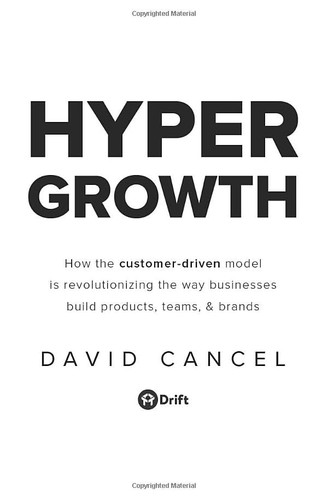
Unlocking Hypergrowth
by David Cancel
A sharp customer-driven thesis stretched thin over startup anecdotes.
- Status
- Read · December 2022
- Bought
- December 21, 2022
- For
- Eng leaders deciding how much to bet on the customer · Founders structuring small product teams · Anyone weighing Responsive Development against Agile
Where it earned its place
The one-paragraph verdict
Cancel’s core idea earns its keep: ship in response to real customers, not to a quarterly roadmap drawn in a vacuum. The “three-person team” (one tech lead, two engineers) and the Burndown framework are concrete enough to actually try, and that’s rarer than it should be in this genre. But the public reviewers who say it “reads like a long tweet” aren’t wrong — the argument is thin, the evidence is a handful of Drift/HubSpot war stories, and “focus on the customer” gets asserted far more than it gets operationalized. You finish wanting the second half of the book: the part about what to do when customers disagree.
Who should read it
Engineering and product leaders who suspect their roadmap has drifted from anyone who actually uses the thing. Founders structuring their first few teams will get the most mileage. Skip it if you’ve already read [Hacking Growth (Sean Ellis)] or anything substantial on continuous discovery — you’ll find this lightweight by comparison.
Where it earned its place
The customer-driven framing showed up directly in how I argued for engineering investment in the roadmap: the case there isn’t “build what’s planned,” it’s “fund the work that closes the loop between shipping and what users actually hit.” Cancel’s three-person team gave me the vocabulary for keeping that loop short.
Skip it if…
You want rigor, citations, or a method that survives contact with a large org. This is a founder’s field note, not a playbook — short on the how, and priced (in time and credulity) accordingly.
[HYPERGROWTH on Goodreads]