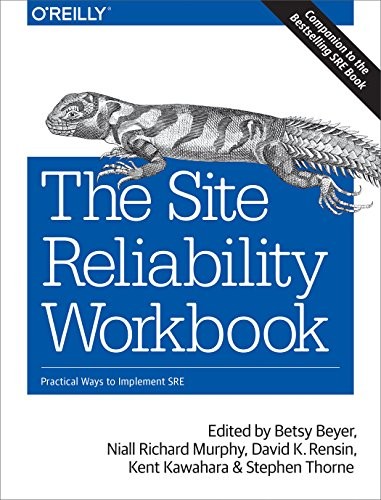
The Site Reliability Workbook
by Betsy Beyer, Niall Richard Murphy, David K. Rensin, Kent Kawahara & Stephen Thorne
The 'how' to the first SRE book's 'why' — strongest when it stops being a Google brochure.
- Status
- Read · May 2026
- Bought
- May 31, 2026
- For
- SREs and platform engineers operationalizing SLOs · Backend engineers running their own services in prod · Anyone who read the first SRE book and wanted the worked examples
Where it earned its place
The one-paragraph verdict
The first SRE book told you why error budgets and SLOs matter; this one shows the worked arithmetic, and that’s where it earns its keep. The SLO and alerting chapters are genuinely good — concrete examples, real burn-rate math, the kind of thing you can adapt the same afternoon. The recurring criticism is fair, though: chapters vary wildly in usefulness, and a few read like Google-Cloud case studies dressed up as guidance (Evernote, Home Depot, NYT). You get less from those than from the technical core. Treat it as a buffet, not a recipe.
Who should read it
Anyone who finished the original SRE book and wanted to see the patterns instantiated, not just argued. SREs and platform engineers standing up SLOs for the first time get the most value. Skip it if you want a vendor-neutral, prescriptive runbook — that book doesn’t exist here, and the case-study chapters will frustrate you.
Where it earned its place
The SLO-and-burn-rate framing shaped how I instrumented messaging in NATS monitoring (Prometheus + Grafana) — defining what “good” means before wiring a single alert. And the latency-objective thinking is exactly what drove Latency: 60s to 3s: pick the target percentile, measure against it, then optimize, rather than chasing a vague “make it faster.”
Skip it if…
You want hands-on config you can paste, or you’re allergic to Google-flavored examples. The principles travel; the case studies mostly don’t.