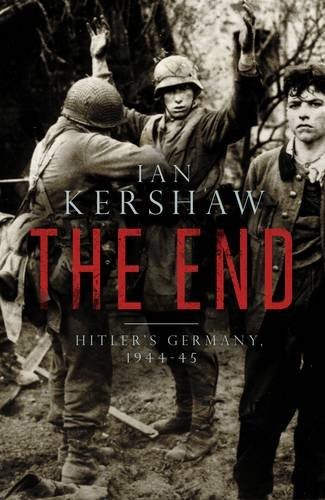
The End: Germany 1944-45
by Ian Kershaw
A grim, granular study of why a doomed regime kept fighting — heavy going, but it sticks.
- Status
- Read · September 2021
- Bought
- September 29, 2021
- For
- Readers who already know the broad WWII arc · Anyone interested in how systems keep running past the point of reason · History readers who don't mind dense, archival detail
The one-paragraph verdict
Kershaw takes one question — why did Nazi Germany keep fighting after July 1944, when surrender was the only rational move — and stays on it for 400-odd pages. The strength is the human dimension: he reconstructs how fear, inertia, terror against deserters, and a leadership with nowhere to go combined to keep the machine grinding. The honest criticism, which some reviewers raised, is that the central question isn’t quite as unexamined as the framing claims, and the answer (“structures of command held”) arrives early and then gets re-evidenced at length. It is meticulous rather than propulsive. I came away convinced, occasionally bored, and with one durable idea about how dying systems behave.
Who should read it
Read it if you already have the WWII outline in your head and want the endgame in forensic detail, or if you’re drawn to how institutions keep functioning long past the point of sense. Skip it as an introduction — it assumes context and won’t hand-hold. Casual readers will find the pacing flat.
Where it earned its place
It gave me a sharper instinct for failure that doesn’t stop: organizations, like regimes, often keep executing a losing strategy not from belief but because no one in the chain can authorize the stop. That mental model has outlasted most of the book’s specifics, which is the most I ask of history I read off the clock.
Skip it if…
You want narrative momentum, a beginner’s overview, or a fresh thesis — this is depth and rigor on a deliberately narrow question, not a page-turner.