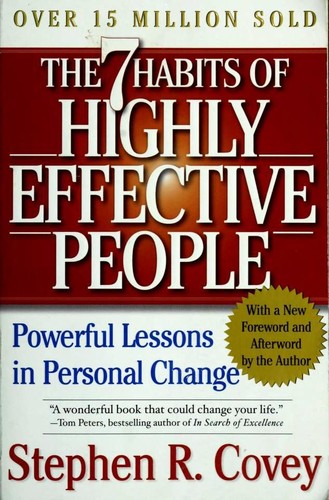
The 7 Habits of Highly Effective People
by Stephen R. Covey
A clichéd-sounding classic that still holds up once you push past the dated packaging.
- Status
- Read · May 2022
- Bought
- May 13, 2022
- For
- New and aspiring engineering managers · Senior ICs who keep getting pulled into leadership · Anyone who wants a principle-first operating model, not tactics
The one-paragraph verdict
Most of the lines in this book have been quoted at you so many times — “begin with the end in mind,” “sharpen the saw” — that it’s easy to assume there’s nothing underneath. There is. Covey’s actual argument, that character and principles outlast tactics and personality tricks, is the thing most management writing skips, and the structure from private wins (be proactive, prioritize) to public wins (win/win, seek to understand) is genuinely useful scaffolding. The cost is real: the language is dated, some chapters drift into abstraction, and the relentless folksy anecdotes wear thin. But the ideas survive the packaging, which is more than I can say for most of the genre.
Who should read it
New managers and senior ICs who keep getting handed leadership without a model for it — this gives you one that isn’t a list of hacks. If you’re looking for org-design specifics, hiring playbooks, or anything tactical, look elsewhere; this operates one level up. Skip it if self-help cadence makes your skin crawl and you can’t read past it.
Where it earned its place
The “circle of influence vs. circle of concern” distinction quietly rewired how I triage what I complain about versus what I act on — a habit that outlasts any framework. “Seek first to understand” is obvious on paper and hard in a code review or an incident retro, and naming it made me slower to argue and faster to listen.
Skip it if…
You want concrete, modern engineering-leadership tactics, or you’ve already absorbed the ideas secondhand and only need the citation. The value here is the integrated whole, not any single quotable line you’ve already heard.