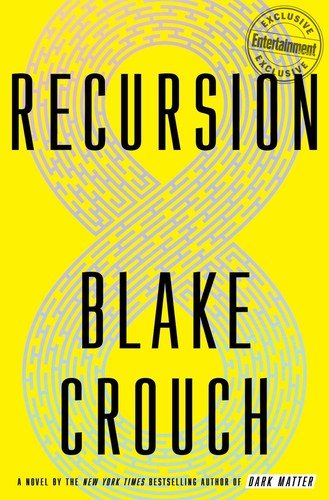
Recursion
by Blake Crouch
A propulsive memory-bending thriller that out-runs its own physics — and mostly gets away with it.
- Status
- Read · May 2026
- Bought
- May 22, 2026
- For
- Sci-fi readers who want pace over rigor · Anyone who likes a clean high-concept hook · People who read engineering books all week and need an off-switch
The one-paragraph verdict
Crouch takes one idea — a chair that lets you return to a memory and live forward from it — and rides it hard. The first half is genuinely gripping: a strong hook, short chapters, and a grief story underneath the gimmick that gives it more weight than the average beach thriller. Where it wobbles is the back half, which loops the same timeline-reset beat until the tension flattens, and the “neuroscience” is hand-waved the moment you press on it. I didn’t mind, because the book never pretends to be hard SF — it pretends to be a page-turner, and it is one.
Who should read it
Read it if you want a confident high-concept thriller you’ll finish in two sittings and don’t need the mechanism to survive scrutiny. Skip it if you’re the reader who shouts “that’s not how brains work” — you will, repeatedly, and it’ll spoil the ride.
Where it earned its place
This is the book I read to stop thinking about distributed systems. After a week of failure modes and retry loops, a story whose entire engine is a clean recursive premise is oddly restful — same shape of problem, zero on-call. It reminded me that a single sharp idea, executed fast, beats a complicated one executed carefully. That’s a useful thing to be reminded of.
Skip it if…
Pass if you want airtight worldbuilding or character depth beyond function — Crouch trades both for speed, and the ending leans on emotion to paper over logic it never fully closes.
[Recursion on Goodreads]