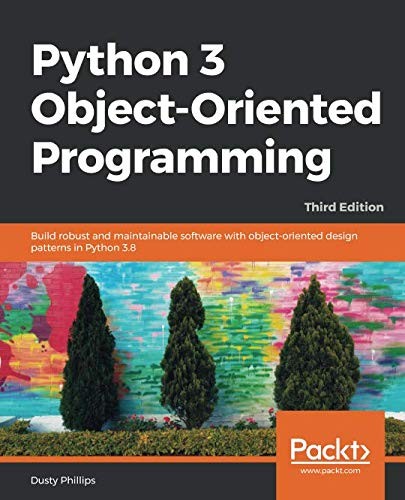
Python 3 Object-Oriented Programming
by Dusty Phillips
Solid OOP onboarding for Python, but thin once you've shipped a few classes.
- Status
- Read · August 2021
- Bought
- August 28, 2021
- For
- Developers new to OOP in Python · Engineers crossing into Python from another language · Self-taught coders filling in design gaps
Where it earned its place
The one-paragraph verdict
Phillips is genuinely good at the thing the book sets out to do: explaining classes, inheritance, composition, and the standard design patterns with practical, real-world examples instead of toy Animal/Dog hierarchies. The pacing is gentle and the code is idiomatic Python, not Java-with-self. The flip side is that it spreads thin — the design-pattern chapters skim the surface of material that
[Design Patterns (GoF)]
treats in depth, and an experienced engineer will find whole chapters that confirm what they already know. It teaches OOP competently; it doesn’t push you past it.
Who should read it
Read it if OOP itself is the unfamiliar part — you’re self-taught, or arriving in Python from a language where objects worked differently. The worked examples do real teaching. Don’t bother if you’ve already designed a few class hierarchies in anger; you’ll be paying for a lot of recap to reach the few sections that earn their keep.
Where it earned its place
The composition-over-inheritance instinct it drills shaped the embedding pipeline in archives: each pipeline stage is a small, swappable object with one responsibility rather than a tall subclass tree, which made wiring Ollama and Qdrant together a matter of plugging parts in, not rewriting a base class.
Skip it if…
You’ve shipped production OOP and just want the patterns — go straight to GoF or the source. This book is an onboarding ramp, not a reference you’ll reach for twice.