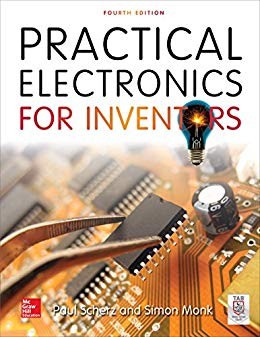
Practical Electronics for Inventors
by Paul Scherz & Simon Monk
A doorstop reference I reach for in bursts, not a book I read front to back.
- Status
- Read · April 2021
- Bought
- April 29, 2021
- For
- Hobbyists building real circuits · Software people crossing into hardware · Anyone who wants one fat bench reference
The one-paragraph verdict
This is the book people mean when they say “the one electronics book to own,” and the breadth earns that reputation — components, theory, and circuits all in one volume, well illustrated and carefully explained. The flip side is that the first couple hundred pages are pure theory before you touch a real circuit, and the structure is uneven enough that it reads more like an encyclopedia than a course. The public 4.53 reflects how often it rescues someone mid-project; my 3.5 reflects that I never actually read it, I look things up in it. As a reference it’s excellent. As a book, it’s a slog if you try to go straight through.
Who should read it
Hobbyists wiring up real boards, and software engineers like me who occasionally cross into hardware and want a single authoritative place to check a formula or a part. Skip it if you want a guided, project-first tutorial — Monk’s smaller books do that job better, and this one will overwhelm you before you blink an LED.
Where it earned its place
It gave me the confidence to stop guessing at circuits and actually understand what I was wiring. I don’t read it; I keep it within arm’s reach of a soldering iron and trust that whatever I half-remember from physics is in there, explained properly. That’s a quiet kind of value — pure enjoyment of tinkering, backed by a book that always has the answer.
Skip it if…
You want a quick start or a narrative read. The theory front-loading and reference-book density make it a poor first electronics book and a worse beach read.
[Practical Electronics for Inventors, Fourth Edition (Goodreads)]