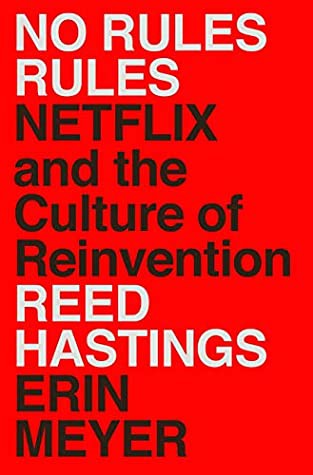
No Rules Rules
by Reed Hastings & Erin Meyer
Sharp on candor and context-over-control; weak on whether any of it survives outside Netflix.
- Status
- Read · January 2022
- Bought
- January 13, 2022
- For
- Engineering managers and team leads · Founders shaping a culture from scratch · Anyone weighing process against autonomy
Where it earned its place
The one-paragraph verdict
The strong core is simple: raise talent density, then trade rules for context so good people can move fast. The chapters on radical candor and “lead with context, not control” are the parts I still quote. Meyer’s outside-researcher sections keep Hastings honest, which the book badly needs — left alone it drifts into Netflix-is-special self-congratulation. The bigger problem is survivorship bias: this is one wildly successful company explaining, after the fact, why it won. The “keeper test” reads as bracing or cold depending on the day. Take the principles; discount the certainty.
Who should read it
Read it if you lead engineers and suspect your process is compensating for a hiring or trust problem rather than fixing it. Founders setting culture early will get the most leverage. Skip it if you want an operational playbook — it’s a philosophy, not a checklist — and skip it if you can’t actually pay top-of-market, because half the model quietly assumes you can.
Where it earned its place
The “context, not control” idea is the backbone of how I think about building a low-drama engineering team: fewer approval gates, more shared context up front, and feedback delivered early instead of saved for review season. The book gave that instinct a vocabulary I could hand to other leads.
Skip it if…
Pass if you distrust single-company business books on principle, or if “talent density” in your context just means a license to fire people. Both readings exist, and the book doesn’t fully guard against the worse one.
[No Rules Rules on Goodreads]