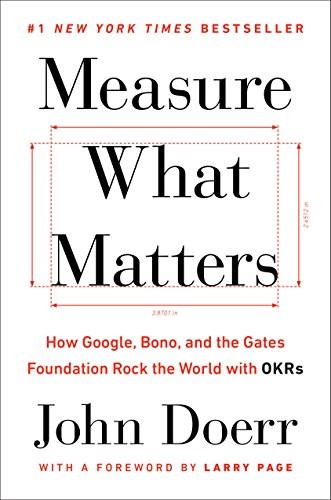
Measure What Matters
by John Doerr
The OKR canon — useful once you skip the case-study padding.
- Status
- Read · December 2022
- Bought
- December 1, 2022
- For
- Engineering leads adopting OKRs · Founders aligning teams on outcomes · Managers tired of vanity metrics
Where it earned its place
The one-paragraph verdict
Doerr does one thing extremely well: he makes the case for separating objectives (where you’re going) from key results (how you’ll know you got there), and for keeping them measurable, time-boxed, and few. The Intel-to-Google lineage is genuinely useful context, and the framework survives contact with real teams. The weakness is the packaging — half the book is first-person testimonials from Bono, the Gates Foundation, and a roster of unicorns, and it reads like an extended pitch for the method rather than an honest accounting of where OKRs fail. It also glosses over the hard part: what to do when key results stay red quarter after quarter. Take the framework, leave the hagiography.
Who should read it
Engineering leads and founders rolling out OKRs for the first time should read the first third and the CFR (“conversations, feedback, recognition”) chapters. If you already run quarterly objectives competently, you’ll find little new here — the book is an on-ramp, not a reference.
Where it earned its place
The “key results, not activities” discipline is exactly the argument I make in Engineering investment in the roadmap — funding outcomes instead of feature lists.
Skip it if…
You want depth on goal-setting failure modes, or you’re allergic to business-book repetition. Doerr makes his point by page 60 and spends the rest proving it with anecdotes.