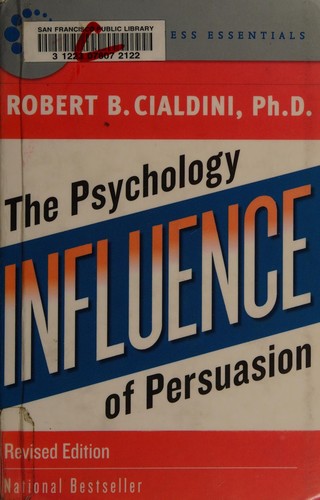
Influence: The Psychology of Persuasion
by Robert B. Cialdini
The six levers behind every 'yes' — useful even when the prose pads them out.
- Status
- Read · April 2022
- Bought
- April 19, 2022
- For
- Engineering leads who have to move people, not just code · Anyone driving alignment across teams without authority · PMs and ICs negotiating scope, priorities, and trade-offs
Where it earned its place
The one-paragraph verdict
Cialdini distills decades of research into six levers — reciprocity, commitment, social proof, authority, liking, scarcity — and names them well enough that you start spotting them in the wild within a day. That naming is the real value: it turns vague intuitions about why a meeting swung one way into something you can reason about. The evidence-based grounding is genuinely the book’s strength, and reviewers rightly praise how memorable the six come out. The weakness, also widely noted, is padding: the anecdotes repeat, some examples feel dated, and the core would survive being half as long. There’s also an unavoidable ethical edge — the same levers that defend you can be used to manipulate, and the book is more useful than comfortable on that point.
Who should read it
Read it if you lead without formal authority and have to win agreement on merits plus persuasion — engineering leads, PMs, anyone brokering cross-team alignment. Skip it if you want hard negotiation tactics or quantitative decision theory; this is social psychology, not a deal playbook, and it won’t pretend otherwise.
Where it earned its place
The “commitment and consistency” and “reciprocity” principles shaped how I approached building an engineering–product partnership. Small early agreements — a shared definition of “done,” a jointly owned roadmap doc — created the consistency pressure that kept both sides honest later, and front-loading concessions made the harder asks land. The book gave me the vocabulary for what was already half-working.
Skip it if…
If you’ve absorbed the six principles secondhand already — and most people in tech have — the full book adds repetition more than insight. Read a solid summary first; buy it only if you want the original evidence.
[Influence on Goodreads]