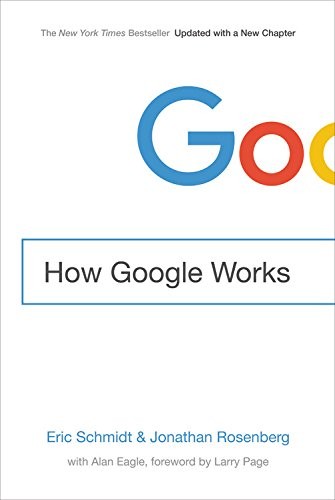
How Google Works
by Eric Schmidt & Jonathan Rosenberg
A sharp memo about hiring smart creatives, stretched into a book it didn't need to be.
- Status
- Read · February 2018
- Bought
- February 15, 2018
- For
- Engineering managers thinking about hiring bars and team composition · Tech leads shaping a team's culture, not just its backlog · Anyone curious how Google rationalised its own playbook
Where it earned its place
The one-paragraph verdict
The premise lands: when leverage comes from a handful of high-agency people, your job is to hire them, give them room, and stop managing them like cogs. Schmidt and Rosenberg are good on hiring and on why culture is a design decision rather than a poster. The recurring, fair criticism — which I share — is survivorship bias: it’s the playbook of a company that had a money-printing search business backing every bet, and a lot of the advice quietly assumes that cushion. It’s also more anecdote than framework, so you finish with conviction but few repeatable moves. Read it for the mindset shift, not the operating manual.
Who should read it
Managers and tech leads who set hiring bars and shape team culture, and anyone who wants the inside rationalisation of Google’s people decisions. Skip it if you’re after concrete systems for sizing, reorgs, or career ladders — this book gestures at those, it doesn’t hand you the tools.
Where it earned its place
The “hire for the role you can’t yet describe” instinct fed directly into how I think about sizing teams in the copilot era: when each engineer carries more leverage, you staff for judgement and range, not headcount. This book is where I first took that argument seriously, even if it never does the staffing math itself. See [How Google Works on Goodreads] .
Skip it if…
You want a tested method rather than a confident memoir. If your context isn’t a cash-rich platform company, read it with the survivorship caveat firmly in mind.