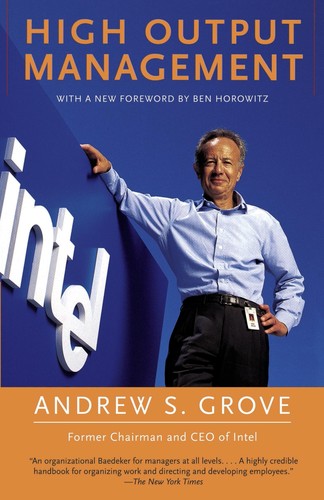
High Output Management
by Andrew S. Grove
The clearest book on what a manager's job actually is — output, not activity.
- Status
- Read · May 2026
- Bought
- May 22, 2026
- For
- New and mid-level engineering managers · Tech leads stepping into people leadership · Anyone running one-on-ones or goal-setting
Where it earned its place
The one-paragraph verdict
Grove runs a factory metaphor the whole way through, and it works: a manager’s output is the output of their organization plus the organizations they influence, full stop. The frameworks that earned this book its reputation — managerial leverage, one-on-ones as the manager’s medium, and the goal-setting system that later became OKRs — are concrete enough to act on the same week you read them. The recurring criticism is fair: the breakfast-factory examples and the 1983 org charts feel dated, and a few chapters read like a manufacturing-ops primer. None of that dulls the core, which has aged better than most of what’s been written since. [High Output Management on Goodreads]
Who should read it
New and mid-level engineering managers, and tech leads about to inherit people. If you’re already running disciplined one-on-ones and tying team goals to measurable output, you’ll find confirmation more than revelation — read it anyway for the leverage chapter. Individual contributors with no interest in management can skip it without guilt.
Where it earned its place
Grove’s leverage math is the spine of my Reducing WIP argument — finishing beats starting because half-done work produces zero output. His “what is a manager’s real job” question is also exactly the one I’m wrestling with in Sizing teams in the copilot era, where leverage per person is shifting fast.
Skip it if…
You want modern remote, async, or staff-IC-track guidance — Grove predates all of it, and the in-person, co-located assumptions are baked deep into the examples.